

AI WEBSITES built for google...
...Custom Designed For Your Dealership!
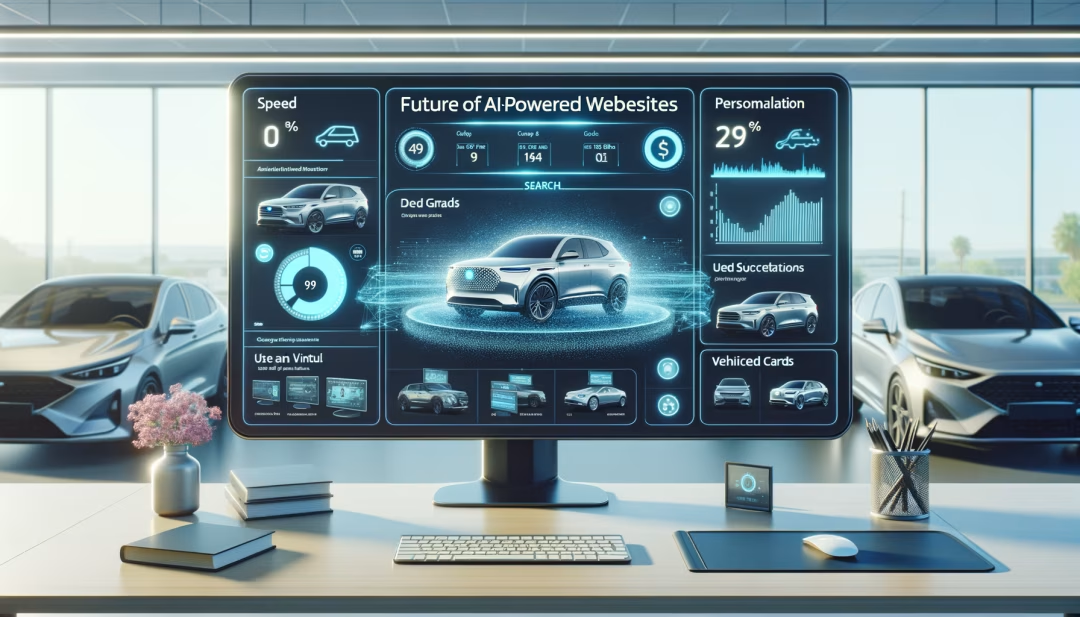
Car shoppers expect fast, relevant, and trustworthy experiences. The future of AI-powered websites brings those expectations to life for used car dealerships. AI can surface the right vehicles faster, personalize search and filters, explain complex financing, and answer questions with real clarity. Behind the scenes, AI helps structure inventory data, improve page speed, and strengthen search visibility so the right customers can discover your vehicles at the right moment. From smarter vehicle recommendations to real time pricing insights, AI turns a traditional site into a responsive digital showroom built to win attention and earn trust. On this page, you will learn how AI-driven platforms improve Core Web Vitals, automate technical SEO, and streamline content for both single store and multi location dealerships. You will also find helpful links to deeper resources and research that compare platforms, outline best practices, and show how to prepare your site for generative search and the next wave of automotive retail.
You Want DATA PARTNERS? WE HAVE A FEW!
...If you want more, we'll set them up for FREE!





PROPRIETARY CODE
ZERO WORDPRESS
100% MADE IN USA
LOVED BY GOOGLE
LUDICROUS SPEED
FULLY RESPONSIVE
BUILT FOR GOOGLE
DESIGNED FOR YOU
We Give You More...
...Everyone else just doesn't compare!
AI is not just another feature. It is a foundation that changes how inventory is discovered, evaluated, and purchased online. Explore how an AI-first platform can enhance search rankings, improve page experience, and deliver personalized journeys that move shoppers from research to the right test drive. For deeper background, see ai-powered-websites-explained, ai-websites-for-car-dealers, and dealer-websites-with-best-seo.
daracoreai Expert Feedback
DaraCoreAI Frequently Asked Questions
Why AI-Powered Websites Matter for Used Car Dealerships
Used car buyers compare dozens of vehicles across multiple sites, and the dealership that answers their exact need first usually wins the lead. AI-powered websites combine structured data, predictive search, and real time content optimization to match a shopper with the best fit vehicle in fewer clicks. They also automate technical SEO tasks that traditionally require complex and ongoing work. That adds up to better rankings, cleaner user flows, and higher quality leads for the sales team.
What Makes a Website AI-Powered
An AI-powered site is built on a platform that uses machine learning and automation across search, content, inventory, and performance. It is different from a conventional CMS that relies mainly on manual publishing and plugins. To understand the core building blocks, review what-is-an-ai-website-platform and ai-powered-websites-explained. In short, an AI-first system:
- Personalizes vehicle discovery based on shopper intent signals, behavior, and location
- Optimizes content and internal links to strengthen visibility for long tail queries that convert
- Automates schema and metadata for inventory, specials, and location pages
- Improves Core Web Vitals with modern, lightweight rendering and caching
- Continuously tests copy, images, and layouts to lift conversions
AI and Search Visibility
Strong search performance for used vehicles depends on accurate data, clear architecture, and fast pages. AI platforms generate and maintain technical elements that keep your site in top shape. They map vehicle attributes into SEO friendly URLs, titles, and headers, and they update internal links as inventory changes. To see how architecture impacts results, explore dealer-website-seo-architecture, website-structure-for-seo, and automotive-seo-website-architecture. For the performance side, review fastest-automotive-dealer-websites and platforms-with-best-core-web-vitals.
Preparing for Generative Search
Generative search experiences favor sites that are well structured, credible, and fast. An AI-first platform structures content so it is easy for search engines to summarize and cite. Learn more in websites-built-for-generative-search and websites-built-for-google-sge. These resources explain how to organize inventory, FAQs, and educational content that supports the shopper journey from research to purchase.
Personalization That Respects Privacy
Personalization improves conversion when it is helpful and transparent. AI can highlight vehicles based on budget, body style, and features a shopper has shown interest in, then surface financing content at the right moment. A trustworthy platform also provides clear disclosures and consent options. See visitor-agreement for policy considerations that build confidence without adding friction.
Faster Paths to the Right Vehicle
Shoppers who know what they want expect a quick route to relevant inventory and the ability to validate price and condition. AI supports this by:
- Dynamically sorting and filtering listings based on top converting signals
- Auto generating feature highlights and comparisons for similar vehicles
- Syncing structured data for VIN, trim, options, mileage, and price to enhance trust
- Surfacing trade and financing tools when intent is strongest
To see this in action, browse used-inventory and evaluate how vehicle pages can be structured for clarity. If you are comparing platforms, the study at dealer-website-performance-study and the guide at dealer-website-technical-seo outline what to test.
Modern Performance and Core Web Vitals
AI-powered platforms often pair intelligent content with a modern front end that delivers strong Core Web Vitals. That means minimal JavaScript, efficient image handling, server side rendering where it helps, and edge caching. These choices do not just win speed tests. They reduce bounce, improve engagement, and create more leads from the same traffic. If you want to dig into performance best practices, see why-website-speed-matters-for-seo, how-core-web-vitals-impact-seo, and platforms-with-best-lighthouse-scores.
Multi Location and Franchise Considerations
If you operate multiple rooftops, AI can centralize inventory rules and SEO while preserving what is unique for each location. It can maintain consistent schema, navigation, and tracking, then customize content and specials locally. Learn how structure scales in multi-location-website-platform, centralized-seo-management, and multi-location-seo-strategy. For franchise teams, franchise-digital-infrastructure and franchise-website-management-platform provide frameworks that balance brand standards with store level agility.
Content That Builds Confidence
Helpful content answers real questions about condition, financing, warranties, and trade value. AI can propose topics, draft outlines, and enforce structure, while your team adds local knowledge and store voice. This balance scales output without sacrificing authenticity. For a starting point, check dealership-website-seo-guide and ai-websites-and-search-engine-optimization. If you want to help shoppers price their current car, direct them to value-my-trade. To maintain post sale transparency, keep sold-inventory available as a research resource.
How to Evaluate Platforms
When comparing website platforms, focus on outcomes that matter to used car buyers and to your team. A practical scorecard includes:
- Search performance: Can the platform grow long tail visibility for make model trim year queries
- Core Web Vitals: Are Largest Contentful Paint, Interaction to Next Paint, and Cumulative Layout Shift consistently strong
- Inventory SEO: Are VIN level pages optimized with correct schema, images, and meta
- Personalization: Does the site adapt results and content to intent without slowing down
- Content workflow: Can AI assist your team with research, drafting, and optimization while preserving editorial control
For detailed comparisons, visit automotive-website-platform-comparison, dealer-website-platform-comparison, and website-platform-performance-comparison. To see rankings by speed and SEO, reference automotive-dealer-website-platforms-ranked and dealer-websites-with-best-core-web-vitals.
Implementation Roadmap
A smooth transition to an AI-first platform follows a clear plan. Start with discovery, where you document current traffic, conversions, and content inventory. Next, define a target architecture for inventory, blog, location, and service content. Then run a pilot migration of a subset of pages to validate speed, SEO, and analytics tracking. Train your team on AI assisted workflows and publishing standards. Launch with redirects, schema checks, and a Core Web Vitals validation. Follow with A B tests that refine personalization rules and page templates. For a deeper build checklist, see how-dealer-websites-should-be-built and technical-seo-for-modern-websites.
Common Myths About AI Websites
- Myth: AI replaces your team. Reality: AI speeds up research and structure while your experts add local insight and quality control.
- Myth: Personalization invades privacy. Reality: Helpful, consent based personalization focuses on relevance, not personal identity.
- Myth: AI content is thin. Reality: With strong data and editorial standards, AI assisted pages can be more comprehensive and up to date.
- Myth: Fast sites cannot be visual. Reality: Modern image pipelines deliver sharp photos and quick load times together.
How This Helps Real Shoppers
Imagine a buyer searching for a low mileage SUV with advanced safety features under a set monthly payment. An AI-powered site identifies the right trim mix, surfaces transparent financing content, and recommends a vehicle detail page with a helpful comparison to similar options. The buyer sees accurate features, clear reconditioning notes, a fair market view of price, and an easy path to value a trade. If questions arise, an assistant can answer in natural language and link to authoritative pages. Shoppers experience less friction. Your team earns more qualified leads that are ready for next steps. Explore how to shape these journeys in dealer-websites-that-convert and ai-for-website-conversions.
Related Reading and Tools
Build your plan with research and how to guides tailored to automotive: ai-websites-for-automotive-dealers, fastest-dealership-websites, dealer-website-core-web-vitals, how-dealer-websites-rank-on-google, and ai-for-automotive-websites. For questions about process or timing, visit meet-our-staff or contact-us. If you manage stores in several cities, review locations to align local content standards.
Target keywords to focus on
- future of ai powered websites
- ai websites for car dealers
- dealer website seo
- automotive website platform
- core web vitals for dealerships
Helpful links
Frequently Asked Questions
Don't Put Your
Success On Lay-A-Way...
...Request Your Exclusive Consultation!
